
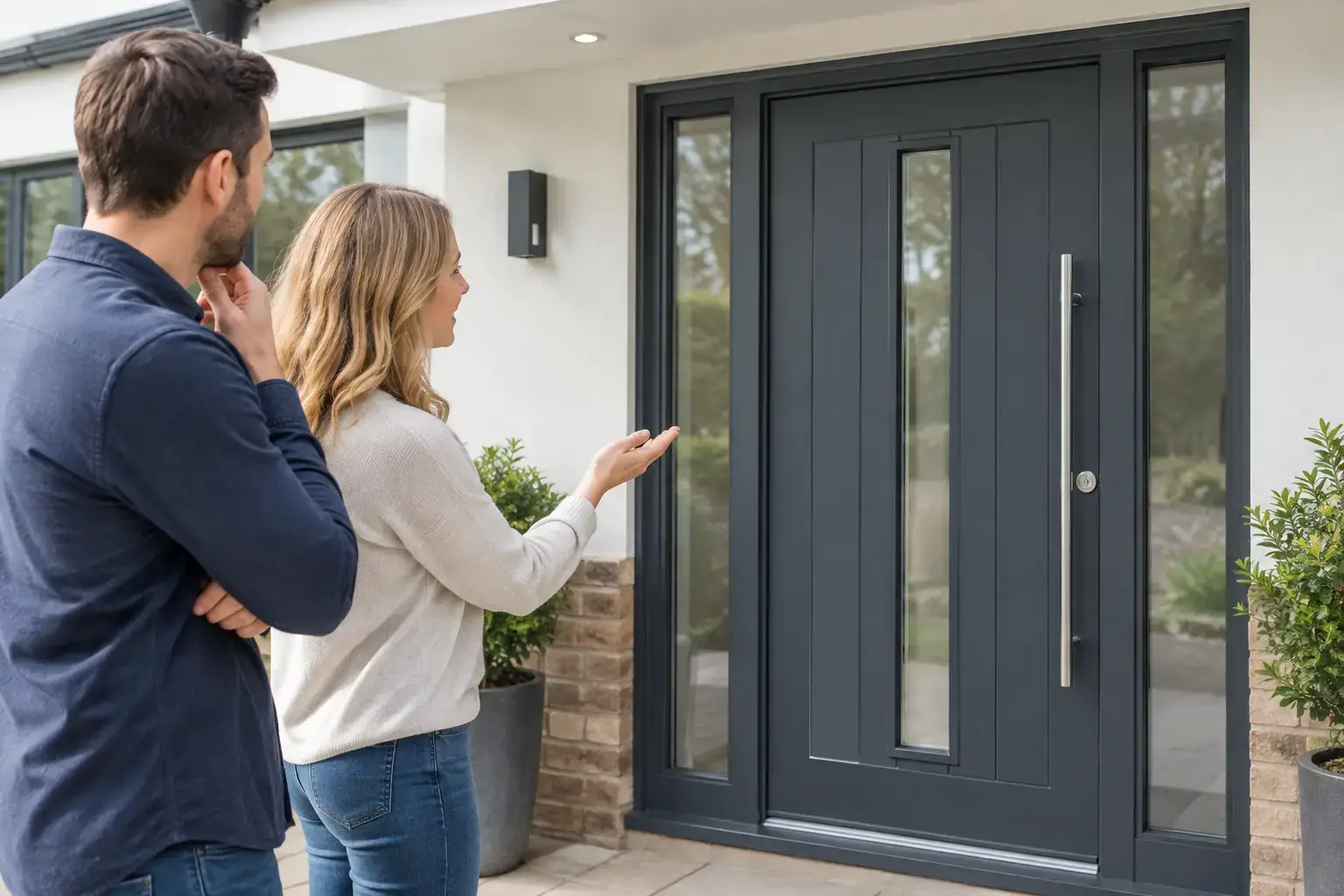
A front door has a tougher job than most homeowners give it credit for. It needs to keep Cumbria weather outside, hold warmth inside, stand up to daily use and make the right first impression every time you come home. Knowing how to choose composite doors means looking beyond a colour swatch and choosing a door that performs well for your property, budget and lifestyle.
A good composite door should feel solid, close cleanly, resist draughts and give you confidence when you lock up at night. It should also suit the character of your home, whether you own a traditional terrace in Workington, a modern detached property near Carlisle or a rural home exposed to wind and rain.
Start with the performance you need
Composite doors are made from several materials rather than one solid piece of timber or uPVC. Although specifications vary between manufacturers, they commonly combine a strong frame, insulated core, reinforced sections and a weather-resistant outer skin. That construction is why they are such a popular upgrade for homeowners who want security, insulation and style in one package.
The right choice depends partly on the position of your door. A sheltered rear entrance may not need the same specification as a front door facing driving rain or a coastal breeze. If your current door feels cold around the edges, lets in draughts or rattles in high winds, prioritise an insulated door slab, quality seals and professional installation over decorative extras.
Ask about the door’s thermal performance, usually expressed as a U-value. Lower figures indicate less heat passing through the door. The door, glazing, frame and fitting all affect the final result, so do not judge performance by the slab alone. A high-performing composite door can help make the entrance hall warmer and more comfortable, but it cannot compensate for gaps around the frame or poor fitting.
How to choose composite doors for security
Security is often the deciding factor, and rightly so. A composite door should feel substantial from the moment you open it. Look closely at the full system: the frame, hinges, locking points, cylinder and reinforced areas around the lock all matter.
A multi-point locking system secures the door at several points along the frame rather than relying on a single central latch. Pair this with a quality cylinder designed to resist common forced-entry methods. If your door includes glass, make sure it is toughened or laminated where appropriate and positioned so it does not compromise security around the lock area.
Hinges deserve attention too, particularly on doors that open outwards. Security hinges and hinge bolts can help prevent the door being lifted or forced from its frame. A secure door is not simply one with an impressive-looking handle. It is a correctly specified and correctly fitted system with no obvious weak points.
For many households, a letterplate, door viewer or smart doorbell can be worthwhile additions. Consider where each feature sits before ordering. A letterplate may be convenient, but it creates an opening in the door, while a door viewer may be unnecessary if glazed panels already offer a clear, private view outside.
Choose a style that suits the property
Composite doors offer far more choice than the plain white replacement doors many people remember. The best design adds kerb appeal without looking out of place. A bold contemporary door can transform a newer home, while a cottage-style design, woodgrain finish or traditional panel arrangement may better suit an older Cumbrian property.
Start with the lines already present in your home. Look at the windows, brickwork, roof colour and any existing porch or canopy. A black, anthracite grey, blue or rich green door can create a striking entrance, while white, cream and timber-effect finishes tend to offer a softer, more traditional look. The right colour is personal, but it should still work with the property rather than fight against it.
Glazing makes a big difference. Clear glass brings maximum daylight but offers less privacy. Obscure, textured or decorative glass can brighten a dark hallway while keeping the entrance private. Side panels and toplights are useful where the opening allows them, especially in homes with naturally dim entrance areas. More glass can make a statement, although it may not be the best choice where the front door opens directly onto a busy pavement.
Think about handles, hardware and finishing touches
Door furniture is where a carefully chosen design can either come together or lose its impact. Choose hardware that matches the door style: a traditional knocker and lever handle for a period look, or a long bar handle for a cleaner contemporary finish.
Black, chrome, gold and heritage-style finishes all have their place, but check the maintenance advice before deciding. The coastal and wet conditions found across parts of Cumbria can be demanding on exterior hardware. A practical, durable finish is usually better value than one that looks perfect only in a showroom.
Do not overlook the frame and threshold
The door itself receives most of the attention, yet its frame is just as important. A poorly matched or poorly fitted frame can undermine the insulation, security and appearance of an excellent composite door.
Your installer should assess the existing opening, surrounding brickwork and internal finishes before recommending a solution. In older homes, openings are not always perfectly square, and that is where experience makes a real difference. The goal is a neat fit, reliable operation and strong weather protection, not simply getting a new door into the gap.
Threshold choice also affects everyday use. A low threshold can make access easier for prams, wheelchairs and anyone with limited mobility. However, the entrance needs to be detailed properly to manage rainwater and maintain a good seal. Discuss how the new threshold will meet the path, step or porch floor, particularly if water tends to collect near the doorway.
Compare quotes on specification, not just price
Composite door prices can vary widely, even when two designs look similar at first glance. That is because the core construction, lock, glass, frame, hardware, survey work and installation standard may all be different.
When comparing quotations, make sure you are comparing like for like. Check what is included for the door style, colour on both sides, glazed units, lock cylinder, handles, frame, trims, removal of the old door and making good afterwards. Ask whether any structural repairs could be needed once the old frame is removed, and how these would be priced.
A cheap initial figure can lose its appeal if essential upgrades are added later. Equally, the most expensive option is not automatically the best one for your home. The sensible choice is a door with the performance and appearance you need, backed by a clear guarantee and fitted by people who take responsibility for the finished job.
Make sure installation gets the attention it deserves
Even the best composite door will disappoint if it is installed carelessly. A proper survey should confirm measurements, opening direction, handle height, glazing choice and any access requirements before the order is placed. This is the time to raise practical details, such as a porch light, alarm sensor, existing flooring or a tight entrance hall.
On fitting day, the old door and frame should be removed with care, the opening prepared properly and the new frame fixed securely. The installer should check that the door opens and closes smoothly, locks easily and seals evenly. Finishing trims and sealant should look tidy inside and out, while the area should be left clean once the work is complete.
At Cumbria Superglaze, professional fitting is treated as part of the product, not an afterthought. A door upgrade is meant to deliver years of reassurance, so a clear no-pressure quotation, an accurate survey and dependable aftercare are worth as much as the design you choose.
A quick decision check before ordering
Before you sign off your new door, make sure you can answer four simple questions: Does it suit the property? Does it offer the warmth and security your household needs? Are the glazing, frame and hardware included in the quoted specification? And do you trust the installer to fit it properly and stand behind the work?
If the answer to each is yes, you are unlikely to regret choosing quality over a short-term saving. Take a photograph of your entrance in daylight, view samples against the brickwork where possible and ask for straightforward advice on the options that genuinely improve your home. The right composite door will earn its keep every day – keeping the weather out, the heat in and your home looking its best.


