
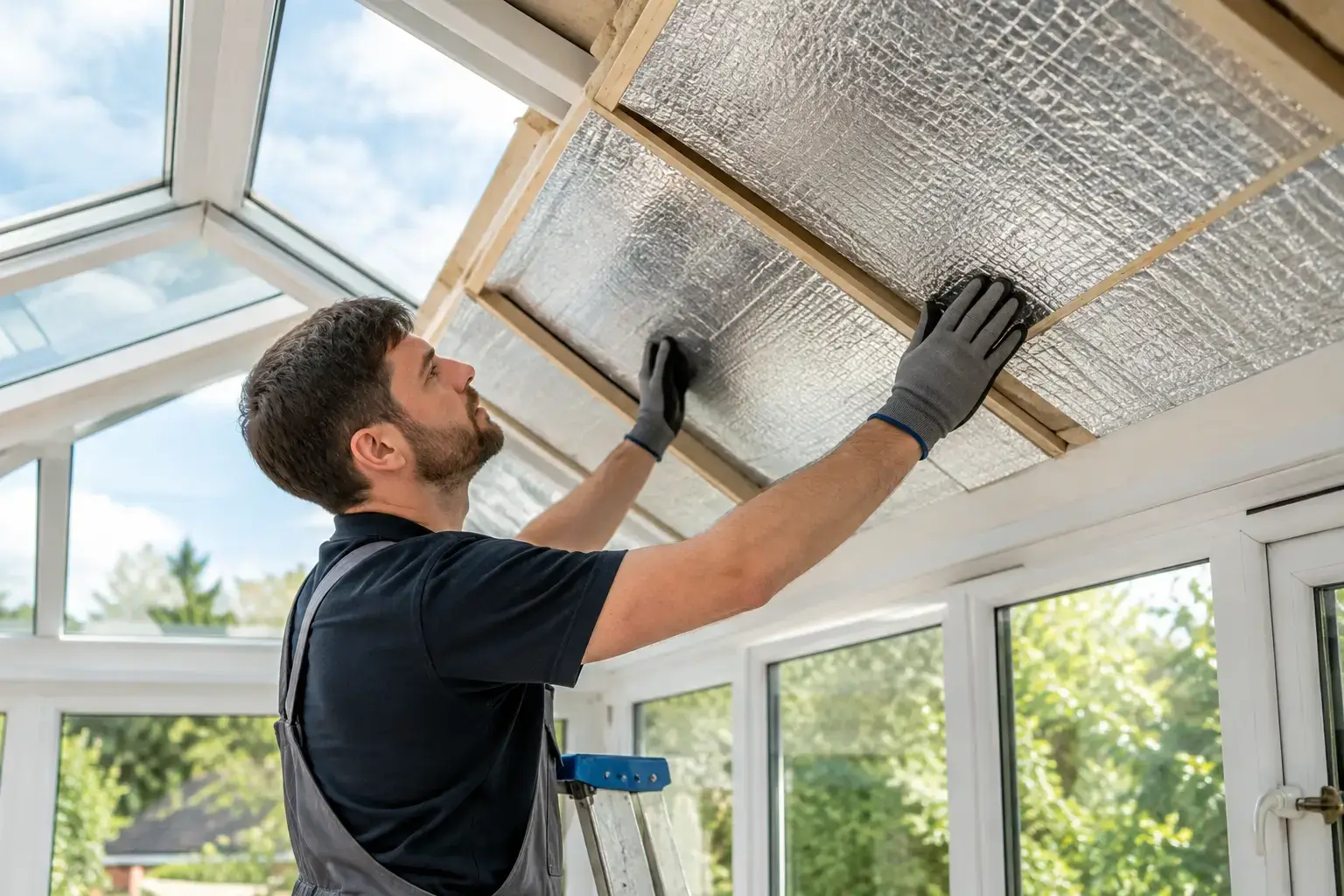
A conservatory that is freezing in January and stifling by July is not doing its job. If you are working out how to insulate a conservatory roof, the right answer depends on the roof you have, its condition and whether you want a quick improvement or a genuine year-round living space.
Roof insulation can make a dramatic difference to warmth, glare and rain noise. But it must be designed carefully. Covering the inside of an old glazed roof without considering ventilation, structural loading and condensation can simply hide a bigger problem. A professionally specified replacement warm roof often costs more upfront, yet delivers the lasting comfort and energy efficiency many homeowners are looking for.
Why conservatory roof insulation makes such a difference
Heat rises, and a conservatory roof is usually its weakest thermal point. Traditional polycarbonate roofs allow large amounts of heat to escape in cold weather while admitting intense solar gain when the sun comes out. Even older glass roofs may have poor-performing glazing compared with modern energy-rated units.
Insulating the roof reduces the speed at which indoor heat is lost. That means the room warms up faster, stays comfortable for longer and puts less demand on your central heating. It can also soften the sound of heavy Cumbria rain, reduce glare on screens and furniture, and make the conservatory feel more like a proper extension of the home.
The key is to look beyond insulation alone. A good roof upgrade balances thermal performance, ventilation, weatherproofing, light levels and the strength of the existing conservatory frames.
How to insulate a conservatory roof: your main options
There are several ways to improve a conservatory roof, but they do not all offer the same result.
Add insulated panels beneath the existing roof
An internal insulation system is fitted below an existing polycarbonate or glass roof. It commonly uses insulation boards, a vapour-control layer and a plasterboard or panelled finish. This can improve comfort and gives the room a more finished, extension-like ceiling.
It is often the most affordable route where the roof is sound and the aim is to take the edge off winter cold. However, it reduces headroom and blocks most or all of the overhead daylight. It also needs careful detailing around roof bars, gutters and ventilation paths. If warm indoor air reaches a cold roof surface, condensation can form out of sight and potentially cause damp or deterioration over time.
For that reason, internal insulation should never be treated as a simple stick-on DIY job. The roof needs assessing first, and the system must manage moisture properly.
Replace polycarbonate sheets with better glazing
If the conservatory structure is in good condition, replacing tired polycarbonate with modern solar-control glass can improve insulation while retaining a bright, glazed appearance. Better glass helps limit unwanted solar gain and heat loss, while giving a clearer view of the sky than polycarbonate.
This option suits homeowners who value natural light and want a noticeable step up without changing the overall style of their conservatory. It is not, however, the same as creating a fully insulated roof. Glass will always lose more heat than a well-built solid warm roof, and suitability depends on whether the existing frames can support the extra weight.
Install a lightweight tiled warm roof
For the biggest transformation, replace the old roof with an insulated, lightweight tiled warm roof. These systems are built with high-performance insulation, a breathable membrane and a durable external finish, often with the option of glazed panels or roof lanterns to bring light back into the room.
A warm roof keeps insulation on the outer side of the structure, helping the roof deck remain warmer and reducing condensation risk. It can turn an underused conservatory into a calm dining room, playroom, home office or everyday family space. It also gives the property a more substantial, premium-looking finish.
The trade-off is that a replacement roof is a larger investment and must be professionally designed for the existing base and frames. The best systems are lightweight, but weight calculations still matter. In many cases, upgrading the conservatory frames, doors or foundations may be sensible at the same time.
Start with a proper roof and frame inspection
Before choosing insulation, check the condition of the entire conservatory. Look for leaking roof bars, failed sealed units, cracked polycarbonate, sagging sections, blocked gutters and signs of water damage around the wall plate. If water is already getting in, insulation will not solve it.
The frames deserve equal attention. Old or poorly fitted uPVC can allow draughts around opening windows, doors and roof connections. A room will not hold its warmth if cold air is continually finding its way inside. Modern A-rated double glazing or high-performance triple glazing in adjoining doors and windows can complement a roof upgrade and improve the result.
A professional survey should establish whether the existing structure is suitable for the chosen roof system. This is especially valuable with older conservatories, where original specifications and past alterations may not be clear.
Do not overlook ventilation and condensation control
A warmer conservatory still needs ventilation. Everyday moisture from cooking, drying clothes, pets and people can collect on cold surfaces. When ventilation is poor, that moisture can become condensation, encouraging mould and making the room feel clammy.
A correctly installed insulation system includes a continuous vapour-control layer on the warm side of the insulation. This limits moist indoor air moving into the roof construction. Ventilation above the insulation allows the roof build-up to manage any moisture safely, while opening roof vents, trickle vents or windows help refresh the room itself.
Avoid sealing every gap without a plan. Draughts are unwelcome, but controlled airflow is essential. This is one reason professionally fitted roofs are worth considering: the performance comes from the complete build-up, not just the thickness of insulation.
Check Building Regulations before work begins
Replacing a conservatory roof can affect Building Regulations, particularly where the new roof changes the thermal performance, structural loading or classification of the space. Requirements can vary depending on the work and the property, so it is worth establishing what approvals are needed before placing an order.
Planning permission is not always required for a roof replacement, but listed properties, conservation areas and certain design changes can bring additional considerations. A reputable installer can explain the likely route and ensure the work is specified appropriately rather than leaving you with paperwork or compliance issues later.
Choose the right option for how you use the room
The most cost-effective solution is not automatically the cheapest one. Think about what the conservatory needs to do in five or ten years’ time. If it is mainly a sunny sitting area used from spring to autumn, upgraded glass may be enough. If it is used daily as part of the house, a tiled warm roof can offer far greater comfort and lower reliance on heating.
It also helps to consider light. A full tiled roof creates a cosy room but changes the atmosphere, especially in a north-facing conservatory. Including glazed sections can preserve daylight without sacrificing the main thermal benefits. The best design is tailored to the orientation, room size, existing frames and the way your household lives.
What to ask an installer
A clear quotation should explain more than the headline price. Ask what insulation is being used, how condensation is controlled, whether structural checks are included, and what finish will be visible internally and externally. You should also know how drainage, flashing, ventilation and any existing roof vents will be dealt with.
For a replacement roof, ask about the system’s weight, thermal performance, guarantees and whether Building Regulations support is included. Experienced local fitting teams will measure carefully and explain the options without pressure. Cumbria Superglaze can advise on roof upgrades that match the structure and style of your home, with practical attention to energy efficiency and a finished look that feels worth the investment.
A conservatory should not be the room everyone avoids when the weather turns. Choose an insulation approach that deals with heat, moisture and structure together, and it can become one of the most comfortable spaces in the house all year round.


