
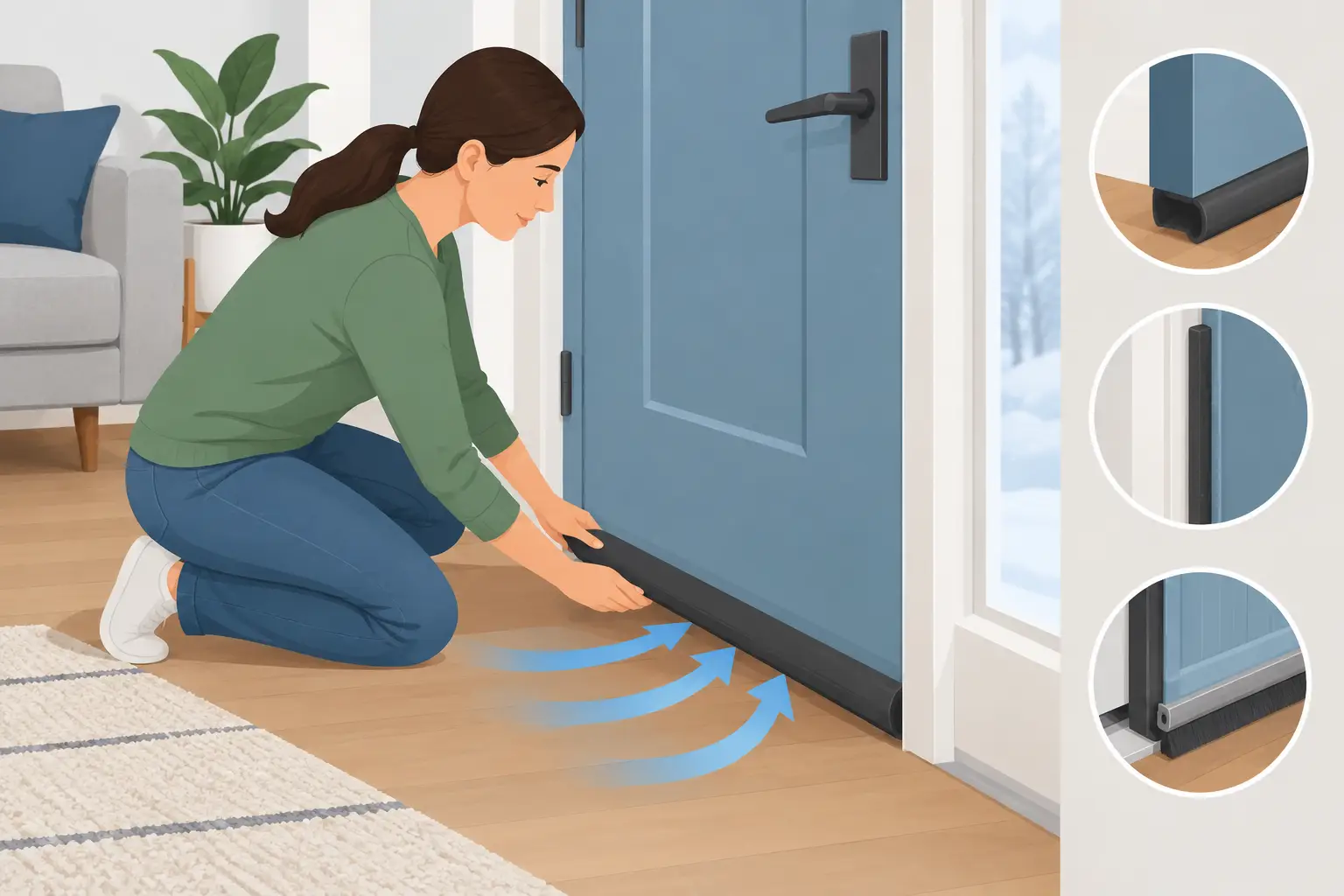
A cold strip of air at the bottom of the front door can make an otherwise warm room feel uncomfortable surprisingly quickly. Learning how to stop draughts around doors is one of the simplest ways to make your home feel cosier, reduce wasted heat and take some pressure off the heating system – particularly during a Cumbrian winter.
The right fix depends on where the air is getting in. A loose brush strip may solve a small gap beneath an internal door, while a draughty external door could point to worn seals, poor adjustment or a door that has reached the end of its useful life. Start with a careful check, then spend money where it will make a lasting difference.
Find where the draught is coming from
Before fitting anything, inspect the whole door rather than assuming the gap at the threshold is the only issue. On a cold or windy day, slowly run the back of your hand around the door frame, hinges, letterbox and threshold. You may be able to feel the airflow immediately. A thin piece of tissue held near the suspected gap can also reveal movement.
Look closely at the seal around the frame. It should sit continuously against the door when shut, without splits, flattened sections or places where it has pulled away from the frame. Daylight visible around the edges is another clear sign that cold air has a route indoors.
Check whether the door closes squarely. If you need to lift, push or slam it to engage the lock, the hinges, keeps or latch may need adjustment. Timber doors can swell and shrink with changing weather, while uPVC and composite doors can occasionally move slightly over time. A poor fit leaves gaps that no amount of temporary draught proofing will fully solve.
How to stop draughts around doors at the threshold
The gap under the door is often the most obvious source of heat loss. It is also the area where homeowners are most tempted to apply a quick fix without checking whether it will interfere with opening, closing or security.
For an internal door, a fitted brush strip or hinged draught excluder can be a sensible low-cost improvement. These are designed to sweep lightly across the floor while allowing the door to move freely. A fabric draught excluder placed along the floor can help in a pinch, but it needs moving every time the door is used and does not provide a permanent seal.
External doors need a more durable approach. A threshold seal, brush strip or rubber fin strip can work well if the door and frame are otherwise in good condition. Choose a product made for external use and measure the gap first. A seal that is too deep will drag across the surface, wear quickly and make the door awkward to use. One that is too shallow will simply leave the draught where it is.
If water enters under the door as well as cold air, do not just pack the gap with foam or sealant. Exterior thresholds need to manage rainwater and allow the door to drain correctly. Blocking drainage paths can create a different, more expensive problem.
Replace worn seals around the frame
Rubber gaskets around a uPVC or composite door are designed to compress when the door closes, creating an airtight barrier. Over time they can become brittle, compressed or dirty, especially on doors exposed to strong weather.
First, wipe the seals and frame with warm soapy water and dry them thoroughly. Dirt can prevent the gasket from sitting correctly. If the rubber is still flexible but looks dry, a suitable silicone-based conditioner may help maintain it. Avoid using harsh cleaners or petroleum-based products, which can damage some seal materials.
Where the seal is cracked, missing or permanently flattened, replacement is usually the better answer. The profile needs to match the existing groove in the frame, so it is worth taking a small sample or asking a professional to identify the correct type. Forcing in the wrong gasket can stop the door locking properly or create uneven pressure around the frame.
Adjust the door before adding more draught proofing
A door can look closed while still failing to press evenly onto its seals. This commonly happens when hinges loosen, the door settles, or the locking keeps are no longer aligned with the lock mechanism.
Many modern uPVC and composite doors have adjustable hinges and locking points. Small adjustments can improve the seal and restore a smooth close, but they need to be made carefully. Over-adjusting the hinges may cause the door to catch, affect the lock or place unnecessary strain on the mechanism.
If the door is difficult to lock, catches on the frame, has visible gaps on one side, or lets in a noticeable draught despite sound seals, arrange a professional inspection. The problem may be a straightforward alignment issue. Equally, it could be a sign that the frame, hinges or door slab need more substantial attention.
Do not overlook letterboxes, keyholes and glazing
A letterbox is effectively an opening through the centre of your door, so it can be a major source of cold air. A letterbox with internal and external flaps offers better protection than a loose, single flap. If the existing flap rattles in the wind or does not close tightly, replacing it can make a real difference.
Keyhole covers are a small addition, but they are worthwhile on older doors where you can feel air coming through the lock. Make sure any cover still allows easy access in an emergency and does not obstruct the key.
For doors with glazed panels, inspect the beading and seals around the glass. Condensation between panes, misted units or cold areas around the edge of the glazing can indicate that the unit is no longer performing as it should. A failed double-glazed unit does not always mean the entire door must be replaced, but it does need assessing properly.
When a quick fix is enough – and when it is not
Simple draught proofing is excellent value when a door is fundamentally sound. Replacing a worn gasket, adjusting the alignment or fitting a correctly sized threshold strip can improve comfort for modest cost. These jobs are particularly useful for side doors, utility room doors and older internal doors where appearance is less of a concern.
However, temporary products cannot compensate for a warped timber door, a damaged frame, failed locking hardware or an old panel with poor thermal performance. If you are continually adding strips, foam and sealant but the room still feels cold, the issue is likely bigger than a single gap.
A modern composite or energy-efficient uPVC door combines a secure fit with insulated construction, quality weather seals and multi-point locking. That means less heat escaping, fewer cold spots near the entrance and stronger everyday security. It can also transform the look of the property, especially where an ageing front door has become faded, swollen or difficult to operate.
For homeowners considering replacement, compare more than the initial price. Ask about the quality of the frame, glazing options, locking system, thermal performance, fitting standards and guarantee. A door only performs as well as its installation, so a precise survey and experienced fitting team matter as much as the product itself.
Keep the door performing through the seasons
Draught prevention is not a one-off job. Give external doors a quick check each autumn, before the colder weather arrives. Clean the frame and drainage channels, inspect seals for damage, test the lock and look for any movement at the hinges. Catching a loose adjustment early is easier than waiting until the door no longer closes correctly.
Avoid painting over seals or drainage openings, and do not force a stiff lock. These small details protect both the weatherproofing and the security of the door. If something has changed suddenly after severe weather, it is worth getting it looked at rather than masking the symptom.
A warm, secure entrance starts with a door that closes cleanly and seals properly. For a minor gap, the right draught-proofing measure can bring immediate comfort. For a tired or poorly fitting external door, a professionally fitted replacement may be the smarter long-term investment – delivering a quieter, warmer and more welcoming home every time you come in from the cold.


