
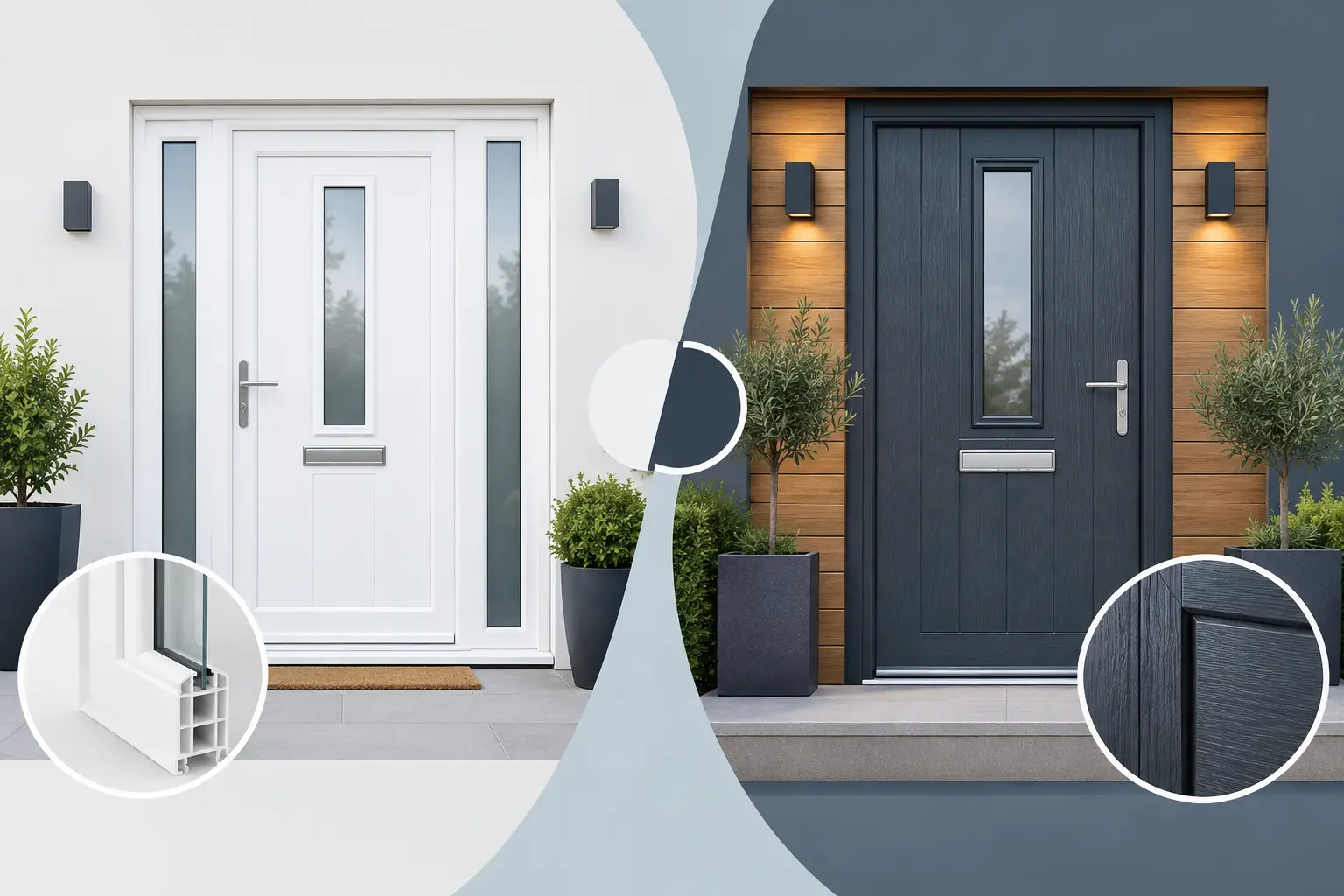
A front door has a tougher job in Cumbria than simply looking smart from the pavement. It must stand up to driving rain, cold spells, busy family life and the daily need to feel secure at home. When comparing uPVC doors vs composite doors, the right answer depends on your budget, the look you want and how hard you expect the door to work over the years ahead.
Both can be secure, low-maintenance and energy efficient when specified and fitted properly. The difference is in their construction, appearance, price point and the level of insulation they can offer. Here is what really matters before you choose.
uPVC doors vs composite doors: the key difference
A uPVC door is made primarily from unplasticised polyvinyl chloride, usually with an insulated internal core and steel reinforcement where required. It is a familiar, practical choice for front, back and side entrances, valued for its competitive price and straightforward upkeep.
A composite door combines several materials. Its outer skin is commonly reinforced for strength and weather resistance, while its dense insulated core is designed to give the door a more substantial feel. This layered construction is why composite doors generally cost more, but also why they can deliver a premium timber-style appearance without the regular painting and maintenance associated with a traditional wooden door.
Put simply, uPVC is the cost-conscious all-rounder. Composite is the higher-spec option for homeowners who want extra visual impact, a solid feel and strong thermal performance.
Appearance: practical simplicity or a statement entrance?
If your existing door looks tired, the replacement will make an immediate difference to your home’s kerb appeal. This is where composite doors often take the lead. Their thicker profile and moulded surface can closely recreate the detail of a timber door, including woodgrain textures, decorative panels and traditional styling. They suit period cottages, town houses and modern properties alike, particularly when paired with sidelights or coloured frames.
Composite doors also offer a broad choice of colours, glazing designs, handles, knockers and hardware finishes. That makes it easier to create an entrance that feels made for the property rather than chosen from a limited range.
Modern uPVC doors have come a long way and are far from plain. They are available in white, wood-effect finishes and selected colours, with decorative glass and panel options to brighten a hallway while protecting privacy. For a clean, simple back or side door, or for a landlord seeking a dependable replacement at a sensible price, uPVC is often exactly what is needed.
The trade-off is thickness and detail. A composite door tends to look and feel more like a high-end entrance door, whereas uPVC provides a neat, attractive finish at a lower initial cost.
Warmth and energy efficiency
A draughty entrance can make a hallway feel cold before the heating has even had a chance to work. A well-made replacement door should help reduce unwanted heat loss, prevent cold spots and make the home more comfortable in winter.
Composite doors are usually thicker than uPVC doors and have a dense insulating core. This can give them excellent thermal performance, particularly where the door is correctly measured, sealed and installed with a high-quality frame. For homeowners upgrading an older, poorly fitting timber or single-glazed entrance door, the improvement can be felt straight away.
uPVC doors also offer good insulation and can be an energy-efficient choice. The final performance depends on the complete specification, not just the material named on the quote. Ask about the door’s U-value, the frame, threshold, weather seals, glazed sections and fitting method. A poorly fitted high-spec door will not perform as it should.
If maximum insulation is your priority, composite normally has the advantage. If you need a warm, reliable door while keeping the project budget under close control, a quality uPVC door remains a very sensible investment.
Do glazed panels make a door less efficient?
Not necessarily. Decorative glass can bring welcome daylight into a dark hallway without sacrificing security or comfort, provided it is high-performance double glazing and fitted as part of a properly designed door. The amount of glass, its specification and the overall door design all affect the final thermal result.
Security: look beyond the door skin
A strong door is reassuring, but security comes from the complete system. That includes the frame, hinges, locking points, cylinder, glazing and professional installation. Both uPVC and composite doors can be specified with multi-point locking systems and reinforced areas to help protect against forced entry.
Composite doors often feel more solid because of their construction and weight. This can be a deciding factor for homeowners who want a more substantial entrance. However, a composite door is not automatically safer than every uPVC door. A correctly specified uPVC door with a secure frame, quality lock and experienced fitting can offer excellent everyday protection.
When comparing quotes, check what is included rather than assuming two doors are alike. Ask about multi-point locks, anti-snap cylinders, hinge security, toughened or laminated glazing where appropriate, and whether the installer will adjust the door after fitting to ensure it closes and locks correctly.
Cost: initial spend versus long-term value
For many households, price is the deciding point. uPVC doors are generally less expensive to buy and install than composite doors. That makes them a strong option where several doors need replacing, such as a front door, utility door and garage personnel door, or where you want a secure upgrade without stretching the budget.
Composite doors cost more because of their layered materials, thicker construction and wider design potential. The extra spend can be worthwhile if the front entrance is a major feature of the property, if you plan to stay for years, or if you want to give the house a standout makeover before selling.
Neither choice should be judged on headline price alone. A cheap door that is poorly measured, badly fitted or supplied with weak hardware can become an expensive frustration. Consider the expected lifespan, energy performance, security specification, design, guarantee and fitting quality alongside the quotation.
For a home improvement that protects comfort and value, it is often better to choose the best specification your budget can genuinely support rather than chasing the lowest figure.
Maintenance and performance in Cumbrian weather
Both door types are designed to be low maintenance. Routine cleaning with warm soapy water, keeping drainage channels clear and checking moving parts will help either door stay in good condition. Avoid abrasive cleaners, harsh solvents and heavy-handed adjustments.
uPVC is particularly easy to live with. It does not need painting or varnishing, and it copes well with the everyday knocks of a busy household. White uPVC can show road grime or marks more readily, but it is simple to clean.
Composite doors are also designed to avoid the ongoing sanding and repainting associated with timber. Their hard-wearing outer finish is a major benefit in exposed locations around the Lake District and coastal parts of Cumbria. As with any external door, colour choice, sunlight exposure and shelter from severe weather can influence how the surface looks over time.
Whichever material you choose, proper installation matters. A door needs accurate surveying, a square frame, secure fixings and correctly set seals to resist rain and wind. This is not an area to compromise on.
Which door is right for your home?
Choose a uPVC door if you want a secure, energy-efficient and tidy-looking replacement at an unbeatable price point. It is especially well suited to side entrances, utility rooms, rental properties and homeowners who prefer a straightforward, low-maintenance solution.
Choose a composite door if you want your front entrance to make more of an impression. It is ideal when you value a timber-style appearance, richer colour choices, a substantial feel and very strong insulating performance. It can be a particularly satisfying upgrade for a visible front elevation where kerb appeal matters.
There is no need to overcomplicate the choice. The best door is the one that fits the property, the way you use it and the level of investment you are comfortable making. A local survey gives you the chance to compare real samples, see colour and glass options in person, and ask direct questions about thermal performance, security and fitting. With the right specification and professional installation, either door can turn a cold, dated entrance into a warmer, safer welcome home.


