
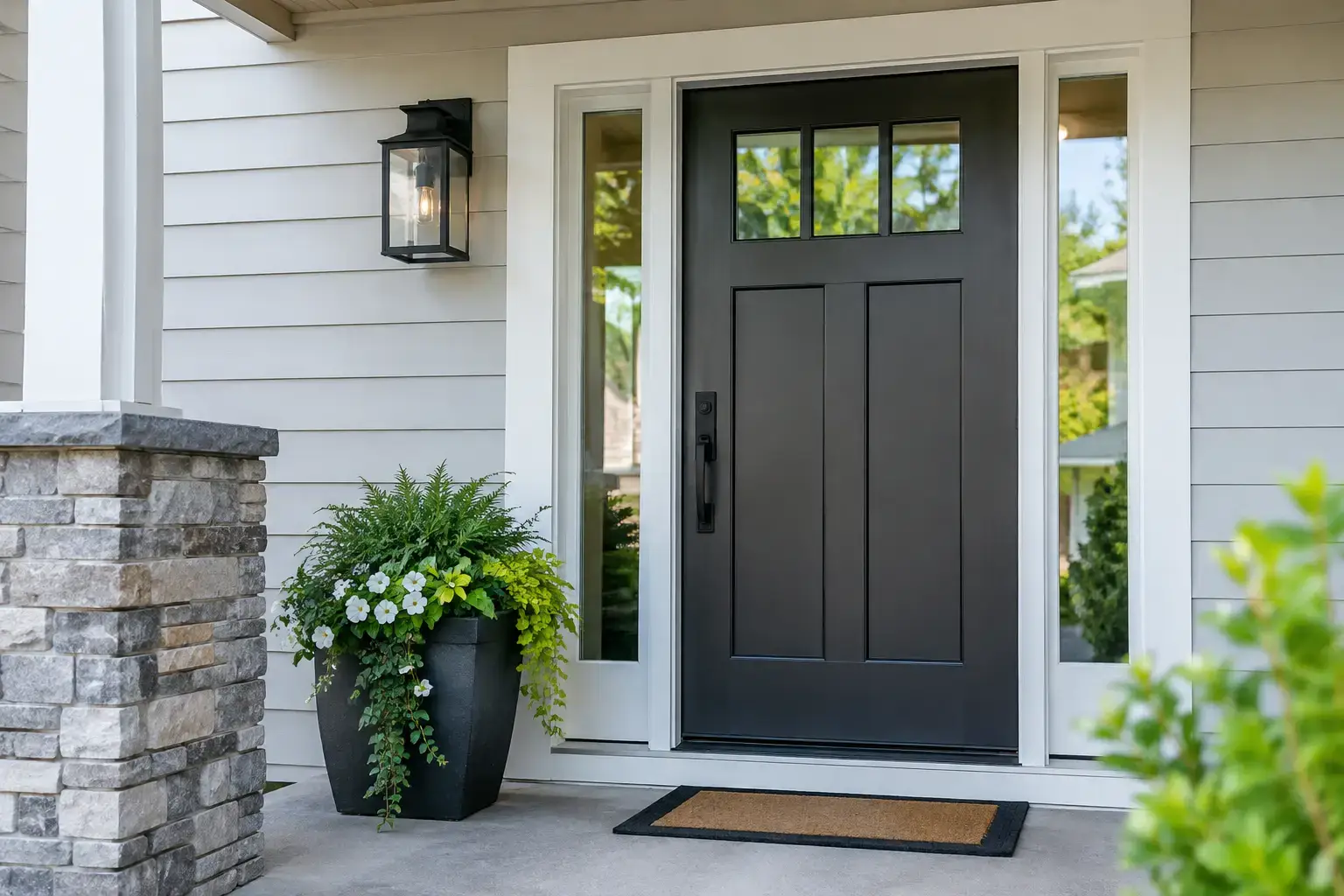
A front door can look solid, close with a reassuring click and still leave your home exposed if it has been fitted poorly. Secure front door installation is about far more than choosing a handsome door panel. The frame, hinges, lock, glazing, threshold and fixing points must work as one system to resist forced entry, block draughts and keep the entrance looking smart for years.
For homeowners across Cumbria, that matters. Wind-driven rain, cold winters and busy family life can quickly show up weak points around an old or badly installed entrance door. A professional replacement should give you a warmer hallway, a stronger first line of defence and a mind-blowing makeover for the front of your property.
What secure front door installation should include
Security starts with the correct survey. Before a new door is ordered, an experienced installer should measure the opening accurately, assess the surrounding brickwork or render and check whether the existing threshold, cill and frame are sound. Fitting a quality door into an unsuitable opening without addressing those details can lead to gaps, movement and a door that never quite operates as it should.
The old frame should normally be removed rather than simply covered over. This gives the fitting team a clear view of the structure and allows the new frame to be positioned square, level and properly supported. The door must then be fixed securely at the appropriate points, with fixings selected for the wall construction. A door frame held only by expanding foam is not a secure installation.
Once fixed, the frame needs careful adjustment. The door should sit evenly within it, with consistent gaps around the edge and smooth operation from fully open to firmly shut. Weather seals should compress correctly when the door closes. Too tight and the door may bind; too loose and cold air, noise and rain can find a way in.
Finally, internal and external finishes should be completed neatly. The goal is not to hide poor fitting with trim or sealant. It is to create a clean, weatherproof junction between door frame and property, protecting the installation while giving the entrance a finished appearance.
The door is only as secure as its lock
Many homeowners understandably focus on the door material, but the lock cylinder is often the point an intruder will target. A secure replacement door should use a high-quality cylinder suited to the locking system, with protection against common methods of attack such as snapping, drilling and picking.
Composite and uPVC doors commonly use multi-point locking. When the handle is lifted, several locking points engage along the frame rather than relying on a single latch. This spreads resistance across the door edge and makes it far harder to force open than an older single-lock arrangement. The precise locking layout varies by door style and manufacturer, but the principle is simple: several well-fitted points are better than one.
Ask what cylinder is being supplied, not merely whether the door has a multi-point lock. A good installer should explain the specification in plain English and show you how to operate it. If you have patio doors, side doors or a garage access door, it can also be sensible to consider the wider security of the property rather than upgrading the front door in isolation.
Choose the right door material for your home
There is no single best front door for every property. The right choice depends on the style of your home, the level of exposure at the entrance, your budget and the performance you expect over the long term.
Composite doors are a popular choice where security, insulation and kerb appeal are all priorities. Their substantial construction gives a solid feel, while the wide range of colours, finishes and decorative glazing options makes it possible to create anything from a traditional cottage entrance to a sharp contemporary look. They are particularly well suited to homeowners who want a premium appearance without the ongoing maintenance associated with timber.
uPVC doors remain an excellent value-conscious option. A well-made, professionally fitted uPVC door can provide strong thermal performance, dependable security and a clean finish at an affordable price. They work especially well for side entrances, utility rooms and rental properties, although modern designs can look just as at home at the front of a family house.
Glazed panels can bring welcome daylight into a dark hallway, but they should be specified carefully. Toughened or laminated safety glass, secure beading and an appropriate glazing design all matter. A large decorative panel may suit a sheltered entrance, while a more private design may be preferable where the door faces a pavement or road.
Don’t overlook hinges, letterplates and thresholds
Weak hardware can undermine an otherwise strong door. Hinges should be designed for the door’s weight and adjusted correctly so the door does not drop over time. On outward-opening doors, hinge security features can prevent the door being lifted or forced from the hinge side.
Letterplates need thought too. A poorly positioned letterplate can create a route towards the inside handle or lock. Modern secure letterplates are designed to reduce that risk while still allowing normal post delivery. The same applies to door viewers, chains and other accessories: they should add practical reassurance, not create a new weakness.
The threshold does an equally valuable job. It has to allow comfortable access while providing a durable, draught-resistant seal at the bottom of the door. Low thresholds can be useful for easier access, but the fitting detail has to manage water effectively. At exposed properties around the coast or in higher parts of Cumbria, this becomes especially relevant.
Why fitting quality affects warmth as well as security
A new door is an investment in comfort, not simply an upgrade to the façade. Gaps around a frame allow warm air to escape and cold air to enter, making the hallway chilly and putting extra demand on the heating. Damp patches, staining and mould around an entrance can also point to failed seals or water getting behind an older frame.
Professional fitting helps protect the energy performance you have paid for. The installer should use suitable insulation around the frame, create effective perimeter seals and ensure the door closes tightly without excessive force. This work supports the door’s thermal specification in real conditions, rather than only on a product sheet.
If you are replacing windows at the same time, it is worth considering the front elevation as a whole. Matching sightlines, colours and glazing styles can transform the look of a property, while energy-efficient windows and a properly fitted door reduce cold spots around the entrance. Cumbria Superglaze can help homeowners put together a tailored package without the hard-sell approach.
Warning signs your current front door needs attention
A door that sticks, rattles in the wind or needs a shoulder to close is not just an annoyance. It may indicate frame movement, worn hinges, failed locking alignment or swelling and deterioration in the door slab. These faults can make the lock less effective and allow draughts to develop.
Look for visible gaps, cracked sealant, condensation between glazed units, loose handles, corrosion on hardware and water marks near the threshold. Also pay attention to how the key turns. If the cylinder feels stiff or the handle has to be lifted aggressively before the key will lock, have it checked rather than waiting for a complete failure.
Not every issue means you need a whole new door. A relatively recent, good-quality door may benefit from adjustment, replacement seals or new hardware. But where the frame is tired, the locking system is outdated or the door has poor thermal performance, replacement is usually the better long-term value.
Questions worth asking before you book
A clear quotation should identify the door style, frame colour, glazing, lock type, hardware, threshold and finishing work, rather than offering one vague price. It should also make clear whether old materials will be removed and how any damaged surrounding areas will be handled.
Ask who will carry out the fitting, what guarantee applies to the frames and glazed units, and what happens if an adjustment is needed after installation. A local specialist with experienced fitting teams and manufacturer-backed protection gives you a much stronger basis for choosing with confidence than a bargain price with unclear details.
Your front door is the point your family uses every day, the first thing visitors see and one of the key barriers between your home and the outside. Choose a design you genuinely like, but make sure the workmanship behind it is just as strong as the first impression it creates.


