
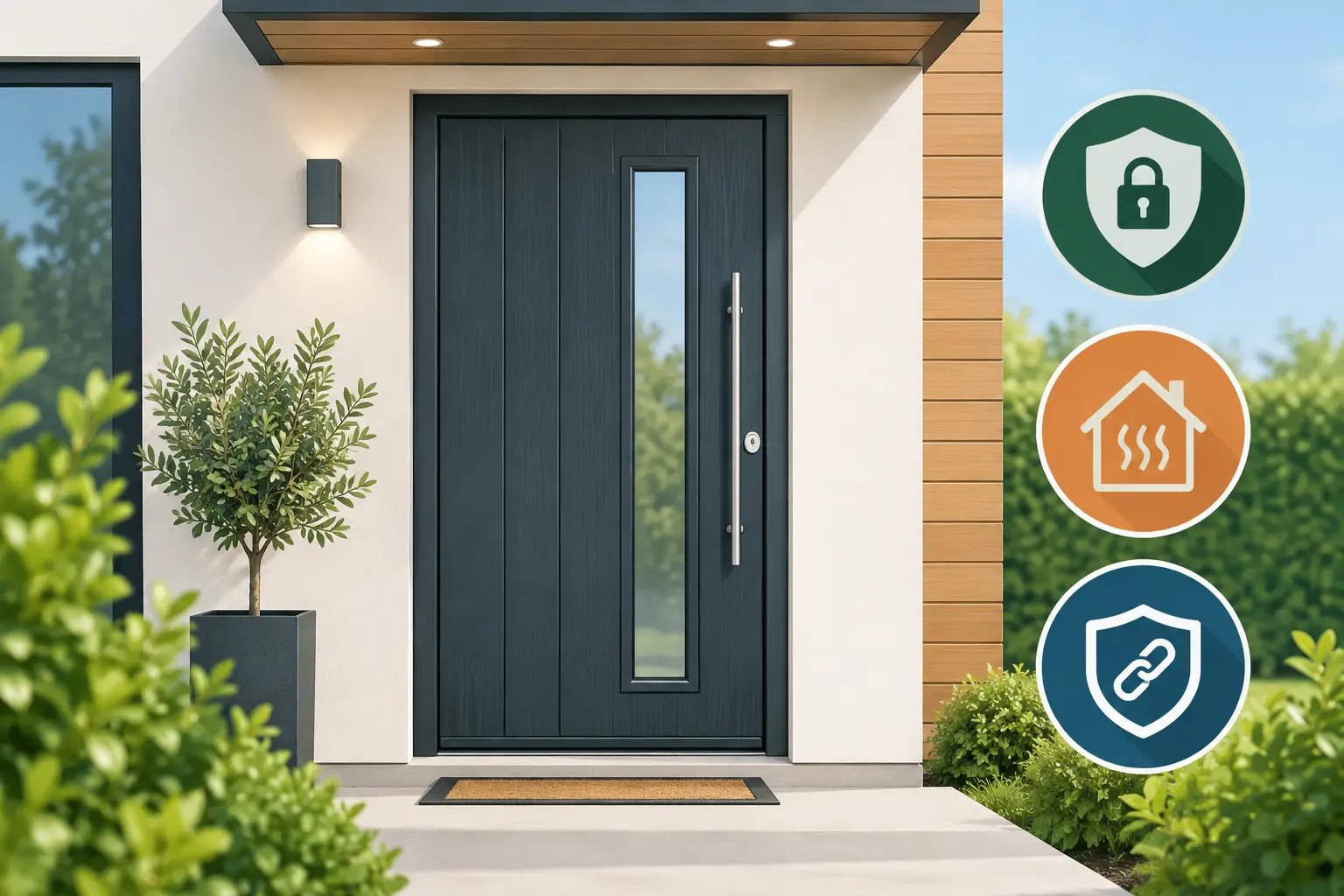
A front door has a hard job in Cumbria. It needs to stand up to driving rain, cold winds and muddy boots, while making your home feel secure and welcoming every time you come back to it. Composite doors are designed for exactly that job, combining the appearance of a traditional timber door with modern materials that help keep warmth in and unwanted visitors out.
For homeowners replacing a tired timber or uPVC entrance door, the difference is often immediate. The hallway feels less draughty, the closing action feels more solid, and the front of the property gets a serious lift. It is a practical upgrade that can deliver a proper mind-blowing makeover without losing sight of the things that matter most: security, energy efficiency and value.
What are composite doors made from?
A composite door is not made from one material alone. It uses several layers, selected to give the door strength, insulation and a durable weather-resistant finish. While specifications vary between manufacturers, a typical door combines a solid or high-density insulated core with reinforced outer layers, a hard-wearing skin and a strong frame.
That construction is what separates composite doors from a basic panel door. Rather than relying on a hollow or lightweight internal structure, they have reassuring weight and rigidity. They are built to resist everyday knocks, temperature changes and the sort of wet weather that can quickly expose weaknesses in an older entrance door.
The outer finish can recreate the grain and character of painted or stained timber, but without the regular sanding, painting and worry over rot that comes with a traditional wooden door. For many households, that balance is the main appeal: a classic look with far less upkeep.
Why a composite front door makes a difference
Your front door is one of the largest openings in the house. If it is poorly fitted, warped or simply past its best, cold air can creep around the edges and make the entrance hall uncomfortable. Heat lost through a draughty door also means your heating system has to work harder.
A quality composite door, correctly measured and professionally fitted, should close tightly against effective weather seals. Its insulated construction helps reduce heat transfer, creating a warmer threshold between your home and the outside. The exact performance depends on the chosen door, frame, glazing and installation, so it is worth comparing whole-door U-values rather than judging a product on its slab alone.
This is particularly relevant in exposed areas around Workington, Whitehaven, Cockermouth and the Lake District, where wind and rain can put an entrance door through its paces. A better insulated door will not transform every heating bill on its own, but as part of a wider programme of energy-efficient windows, glazing and insulation, it can make a noticeable contribution to comfort and running costs.
Security is the other major reason people choose a composite door. A solid structure, reinforced frame, dependable hinges and a high-quality locking cylinder all work together. Look beyond the handle and ask what is fitted behind it. Multi-point locking systems secure the door at several points around the frame, while modern cylinders can offer added resistance to common forced-entry techniques.
A secure door is only as good as its fitting. Gaps, poorly aligned locks and loose hardware undermine even the best-looking product. Accurate surveying and experienced installation matter just as much as the door style you select.
Choosing composite doors that suit your home
There is no single ‘best’ door for every property. The right choice depends on your entrance, your budget and the character you want to create. A Victorian terrace may suit a traditional four-panel design with decorative glazing, while a newer detached home may look sharper with clean lines, sidelights and a contemporary long bar handle.
Colour deserves more thought than many buyers give it. Anthracite grey remains a popular choice for a modern exterior, while black offers a smart, timeless finish. Blue, green and red can bring real personality to a period home, and softer neutral shades work well where you want the door to complement stonework or render rather than dominate it. A woodgrain finish can be a sensible choice when you want the warmth of timber without the maintenance commitment.
Glazing changes both the look and the light levels inside. A fully solid door can feel private and substantial, but it may leave a dark hallway. Decorative, obscured or textured glass brings daylight into the home without putting privacy on display. Think about where the sun sits, how overlooked the entrance is and whether the door opens directly into your main living space.
Hardware is the finishing touch, but it should not be treated as an afterthought. Letterplates, knockers, handles and numbers can make the design feel traditional, contemporary or somewhere in between. Choose a finish that works with your exterior lighting, gate furniture and window colours, but prioritise durable, reliable components over a fashionable look that may date quickly.
Do not forget the frame and threshold
The frame is integral to thermal performance, security and weatherproofing. A well-made door inside a poor frame will not deliver the result you expect. Similarly, the threshold needs to be appropriate for the entrance and the people using it. A low threshold can improve access for pushchairs, wheelchairs and anyone with limited mobility, although the surrounding ground levels must be assessed carefully to maintain effective weather protection.
If you are replacing a door with sidelights or a glazed fanlight above it, consider the full entrance as one design. Matching frames and energy-efficient glazing can give the front of the house a cleaner, more considered finish than replacing the door alone.
Composite doors compared with uPVC and timber
Composite doors usually sit at a higher price point than standard uPVC doors. That reflects their denser construction, stronger feel and wider range of decorative options. For a side or rear entrance where budget is the main priority, a good-quality uPVC door may still be an excellent, sensible choice. It can provide effective security and insulation at a lower upfront cost.
Timber doors offer genuine natural character and can be particularly suitable for listed homes or properties with strict planning considerations. The trade-off is maintenance. Wood needs protecting from moisture and sunlight, and neglect can lead to swelling, cracking or deterioration. A composite door is often the better fit for homeowners who want the timber look without adding another decorating job to the calendar.
A composite door is not automatically maintenance-free. It still benefits from a simple clean with warm soapy water, occasional lubrication of moving parts and a check of the seals. Avoid abrasive cleaners and harsh solvents, which can damage surfaces or hardware. The good news is that the routine is light compared with caring for a painted timber door.
Get the specification right before you order
A door that looks right online or in a brochure may not be the right specification for your home. Before committing, make sure the survey covers the opening size, condition of the existing frame, drainage, brickwork, internal floor levels and any access requirements. This avoids nasty surprises on installation day and helps ensure the finished door performs as it should.
Ask clear questions about the full package: the door’s thermal performance, locking system, glazing options, hardware, frame, threshold, fitting and guarantee. If two quotes look very different in price, compare what is actually included rather than focusing on the headline figure. A cheaper door may have fewer security features, lower-performing glass or no allowance for the finishing work that makes an installation look complete.
Professional fitting is where the investment comes together. The old door should be removed carefully, the opening prepared properly and the new frame fixed square and secure. The installers should check the door opens, closes and locks smoothly, then seal and finish the perimeter neatly. At Cumbria Superglaze, that local, no-pressure approach means homeowners can discuss styles and performance without being pushed into a one-size-fits-all choice.
A door you will notice every day
The best composite doors do more than improve the photograph of your house from the pavement. They make the first step inside warmer, quieter and more secure. Choose a design that feels right for the property, insist on strong thermal and security credentials, and give fitting the same attention as the door itself. Then every trip through the front door becomes a small reminder that you made a worthwhile improvement.


