
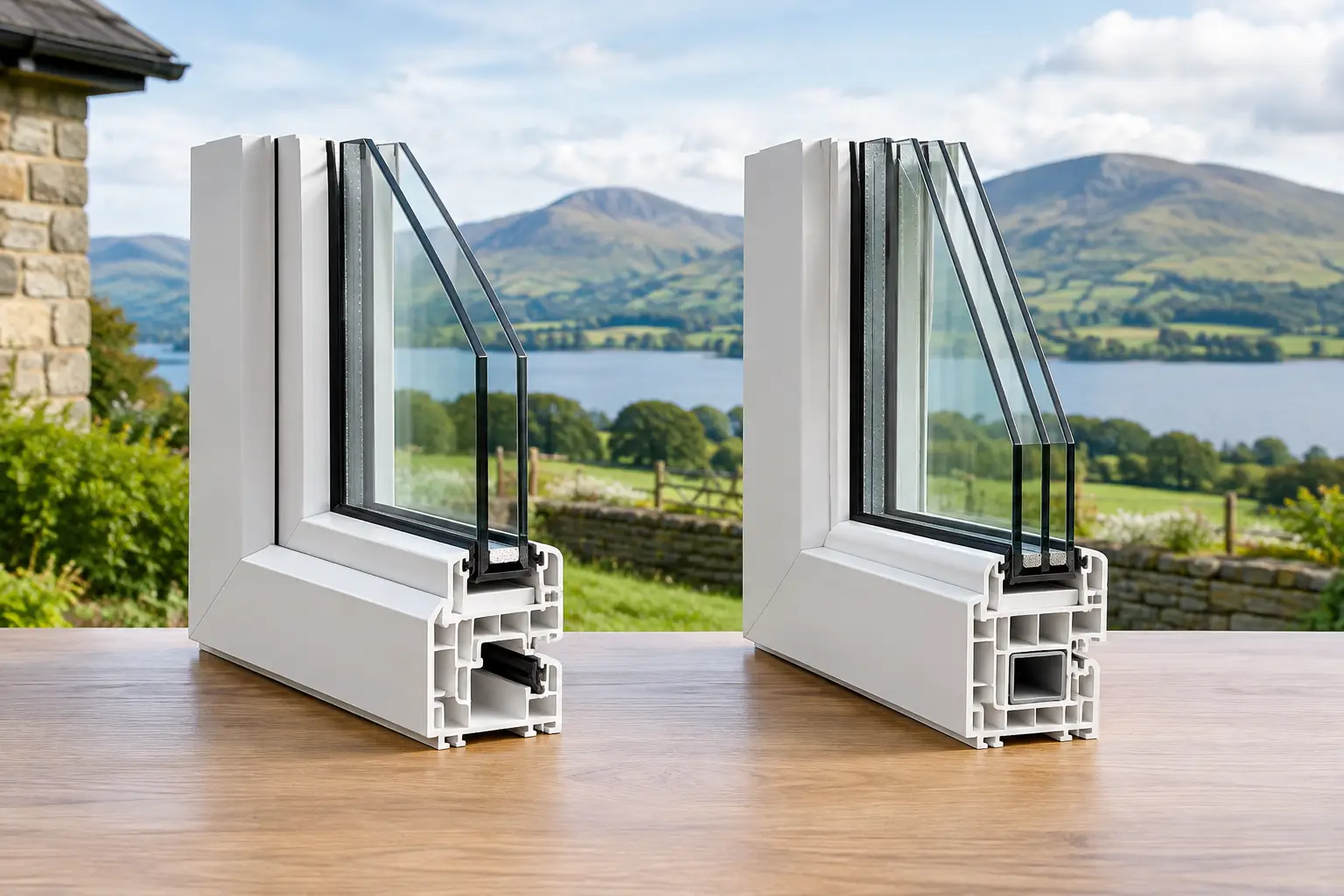
A cold patch beside the sofa, condensation on the glass and a boiler that seems to run constantly are not small irritations – they are signs your windows may be working harder than they should. When comparing triple glazing vs double glazing, the best choice is not simply the one with more panes. It is the option that makes your Cumbria home warmer, quieter and more economical without spending money where it will make little difference.
For many replacement-window projects, high-quality A-rated double glazing is a major improvement. For homes exposed to Cumbrian wind, driving rain or long winter temperatures, triple glazing can deliver another level of comfort. The right answer depends on your property, your existing windows and how you want the rooms to feel all year round.
Triple glazing vs double glazing: the key difference
Double-glazed units use two panes of glass separated by a sealed gap, usually filled with an insulating gas. Triple-glazed units add a third pane and a second insulated gap. That extra layer makes it harder for warmth to escape through the glass and helps the inner pane stay closer to room temperature.
The performance is commonly measured with a U-value. Lower is better because it means less heat passes through the window. A well-specified triple-glazed window can achieve a U-value of around 0.8 W/m²K, while a good A-rated double-glazed window will also offer excellent insulation compared with older units.
That distinction matters, but it should be viewed in context. A window is not just glass. The frame, spacer bars, seals, opening sections and installation all affect its real-world performance. A premium triple-glazed unit fitted poorly is not a better investment than a properly fitted, energy-efficient double-glazed window.
What homeowners notice day to day
The clearest benefit of triple glazing is usually comfort rather than a dramatic overnight change to a heating bill. In a room with older or inefficient windows, the glass can feel cold even when the heating is on. Cold glass draws warmth from the air nearby, creating a chill around the window and encouraging draught-like convection currents.
Triple glazing raises the internal glass temperature, so rooms can feel more even and settled. This is especially valuable in north-facing lounges, bedrooms, bay windows, large glazed areas and exposed properties around Workington, Whitehaven, Cockermouth, Keswick and the wider coast and fell areas.
It can also reduce the chance of internal condensation. Condensation forms when warm, moisture-heavy indoor air meets a cold surface. Better glazing helps, although it cannot solve every condensation issue on its own. Everyday moisture from cooking, showering and drying clothes still needs sensible ventilation.
Noise reduction is another potential gain, but the number of panes is not the whole story. Different glass thicknesses, laminated glass and the size of the gaps between panes can all make a greater difference to sound control than simply adding a third pane. If you live near a busy road, school, railway line or town centre, ask for a glazing specification designed around the type of noise you hear.
When double glazing is the sensible choice
Modern double glazing remains a strong, value-conscious option for a huge number of homes. If you are replacing old single glazing, tired timber frames or failed double-glazed units, the step up to A-rated double glazing can be substantial. You can expect a warmer home, reduced heat loss, improved security and a sharper, cleaner finish inside and out.
It may be the better fit when your budget needs to cover every window and door, rather than concentrating extra spend on a few openings. Replacing all poor-performing windows with quality double glazing can often bring more practical benefit than fitting triple glazing to only part of the house while leaving other weak points untouched.
Double glazing is also lighter. This can be useful for certain window styles, very large opening sashes or properties where retaining a particular look is important. Good frames, secure locking hardware and professional fitting still give homeowners the reassuring combination they want: warmth, strength and long-term reliability.
Where triple glazing earns its extra cost
Triple glazing is particularly compelling where the home loses heat quickly or faces harsh weather. Detached homes, elevated properties, exposed rural houses and homes with large areas of glass are all worth considering carefully. It is also a smart choice for anyone creating a warmer extension, upgrading a conservatory, or fitting windows as part of a bigger insulation and heating-improvement project.
Bedrooms deserve attention too. A more stable internal temperature can make a noticeable difference on frosty nights, particularly in rooms that are only heated for part of the day. Families planning to stay in their property for years may value that everyday comfort as much as the energy performance figures.
The initial cost will usually be higher than double glazing because triple units use more glass, more components and greater manufacturing precision. They are heavier too, which means the frame and hardware must be designed to support them correctly. This is not a product to choose on a headline price alone.
However, the cheapest quote is rarely the lowest-cost decision over time. Poorly made sealed units, weak frames and rushed installation can lead to draughts, misted panes, sticking openings and an early replacement bill. A properly specified system, installed by an experienced local team and supported by a meaningful guarantee, protects the value of the investment.
Do not compare glass alone
When weighing up triple glazing vs double glazing, ask for a complete window specification. A U-value for the centre of the glass is useful, but it does not necessarily represent the whole installed window. Look at the overall window U-value, the energy rating, security features and the quality of the frame construction.
The orientation of your home also matters. South-facing windows can benefit from useful solar gain in winter, while north-facing and shaded elevations get less help from the sun. In some cases, the glazing coating and solar-control specification deserve as much thought as the number of panes.
Ventilation should be part of the discussion as well. A new window installation makes a home more airtight, which is good for efficiency but means stale, damp air needs a route out. Background ventilators, extractor fans and regular everyday ventilation all have a part to play. The aim is a home that retains expensive heat while remaining fresh and healthy.
Finally, do not overlook fitting quality. Accurate measuring, careful removal of old frames, solid fixing, insulation around the opening and neat sealing make a real difference. This is where a local specialist can add value: assessing the building rather than trying to sell the same glazing package for every house.
A practical way to choose
Start with the problem you want to solve. If the priority is replacing dated windows affordably while gaining excellent warmth, security and appearance, A-rated double glazing is often the right answer. If cold rooms, exposed elevations and long-term thermal performance are higher on the list, 0.8 U-value triple glazing is well worth pricing alongside it.
It is also sensible to compare like for like. Make sure each quotation covers the same number of openings, frame style, glass specification, security hardware, trims, ventilation and installation work. A lower figure can look attractive until the missing details appear later.
At Cumbria Superglaze, the useful starting point is a relaxed conversation about the property, not a high-pressure sales pitch. A clear survey can establish whether double or triple glazing will give the better return in your particular rooms, then match the design to the character of your home.
The best window is the one that still feels like a good decision when the Cumbrian weather turns. Choose the glazing, frame and fitting standard that will keep your rooms comfortable, your home secure and your heating working for you rather than against you.


